
Guide · Ocean County, NJ

Two kinds of sealer,
two different jobs.

Almost every paver sealer is either penetrating or film-forming. Once you know which one you want, the shelf gets a lot smaller — and the finish you want decides it.
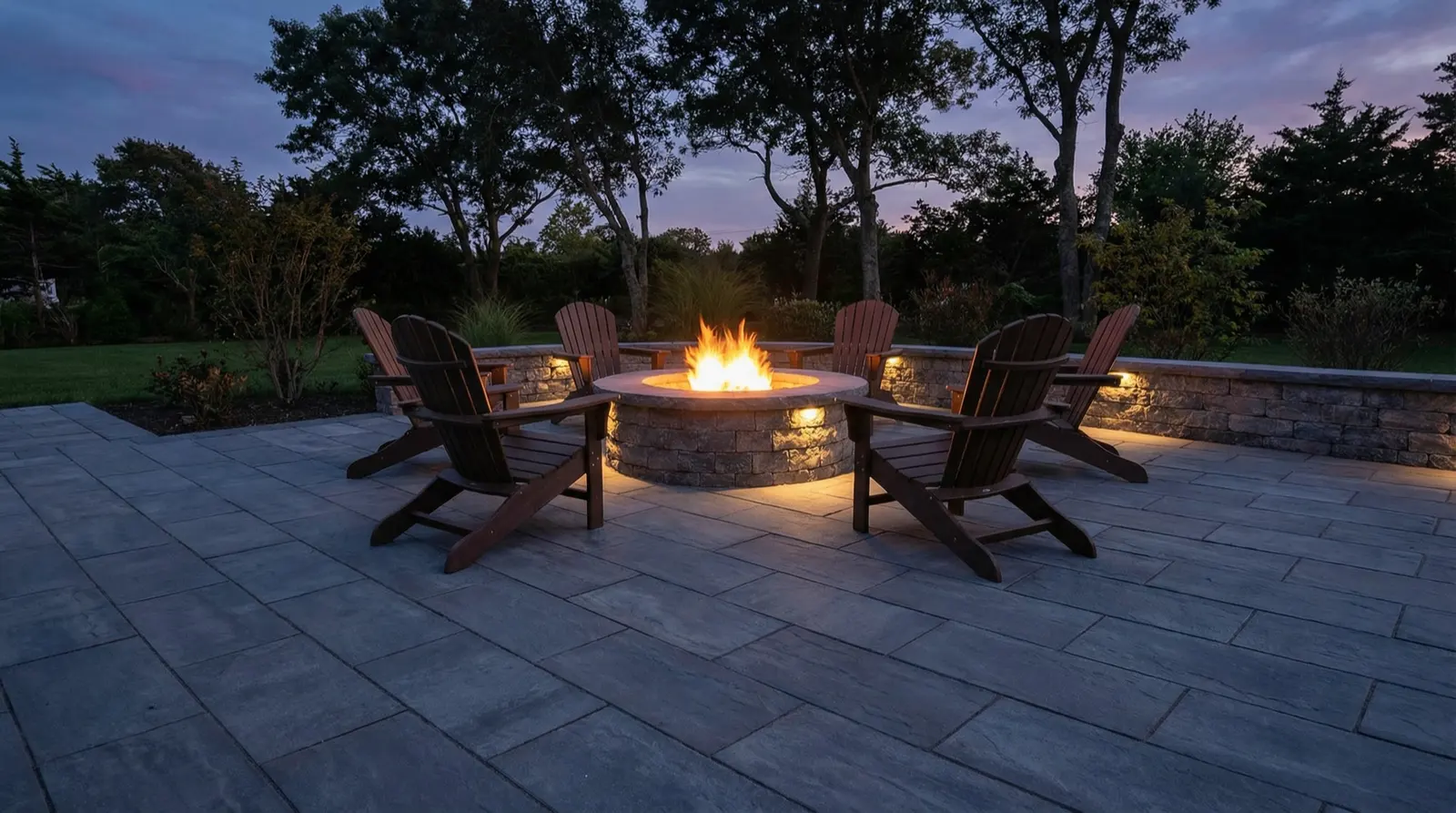
Techo-Bloc Blu 60 paver patio installed in Ocean County, NJ
Natural finish — no film, no sheen

The two types

This is the entire decision. Everything else is brand.

Film-forming (sheen, more upkeep)

  • Leaves a protective layer on the surface
  • Adds sheen, deepens colour, wet-look available
  • Locks the top of polymeric sand joints
  • Typically needs redoing every 2 to 3 years
  • Can blush, peel or get slippery if misapplied
  • Difficult and costly to strip once it fails

Penetrating (invisible, low maintenance)

  • Soaks into the paver, leaves no surface layer
  • Appearance essentially unchanged
  • Repels water, salt and staining from within
  • Typically lasts 3 to 5 years
  • Cannot peel, cloud or turn slippery
  • Does little for joint sand or weeds

How to choose

In order. The first question eliminates most products.

Do you want the look to change?if no, penetrating. If you want gloss or deeper colour, film-forming — decide this before comparing brands
How old are the pavers?under 60 to 90 days, do not seal at all — new pavers are still releasing efflorescence
Driveway or patio?vehicle traffic and tyre marking wear film sealers faster; penetrating usually makes more sense on a driveway
Sun exposurea film sealer in full all-day sun ages faster and shows wear sooner than one on a shaded patio
Are you willing to redo it?film-forming is a recurring commitment — if that is unappealing, penetrating is the honest choice
Is the patio draining properly?if it holds standing water, fix that first — sealing over a drainage problem traps moisture

Where sealing goes wrong

The failures we get called about are nearly all film-forming sealers applied wrong: put on too thick, applied over pavers that were not fully dry, or applied over efflorescence that then got sealed in permanently. The result is a white blush or a peeling film, and the fix is stripping the whole patio chemically — which costs considerably more than the original sealing did.

The other common one is slipperiness. A gloss film on a patio around a pool becomes genuinely hazardous when wet unless a grit additive goes into the final coat. That is worth knowing before, not after.

Before you seal anything

Sealing is a finish, not a repair. It will not stop a patio settling, will not hold pavers that are spreading at the edge, and will not fix joints that keep cracking — those are base and edge restraint problems, and sealing over them just makes the next repair harder.

If the patio moves, start with what belongs under it. If the joints keep failing, start with the joint sand. And for whether your patio should be sealed at all, we wrote that one separately — when sealing helps and when it hurts.

Not sure whether to seal?

Site visit, an honest read on whether your patio benefits from it, then a written estimate within 48 hours.

Paver sealer questions

What is the best type of paver sealer?
It depends which problem you are solving. Penetrating sealers soak into the paver and repel water and salt from inside without changing the look — they are the safer, lower-maintenance choice and what we generally recommend at the shore. Film-forming sealers leave a surface layer that adds sheen and deepens colour, and they also lock polymeric sand joints. Film-forming looks better and needs more upkeep; penetrating is close to invisible and largely leaves you alone.
What is the difference between wet look and natural look sealer?
Wet look is a film-forming sealer that leaves gloss and makes colours read as though the pavers are damp. Natural look is usually a penetrating sealer, or a matte film, that leaves the surface appearance essentially unchanged. This is purely aesthetic — decide which you want before comparing products, because it eliminates half the shelf.
How long should I wait before sealing new pavers?
Generally 60 to 90 days minimum, and many manufacturers say longer. New concrete pavers release efflorescence — a white mineral haze — as they cure, and sealing over it traps it under the film permanently. Waiting through a full season is the conservative approach and we would rather you did.
How often do pavers need resealing?
Penetrating sealers commonly last 3 to 5 years. Film-forming sealers typically need redoing every 2 to 3 years, sooner on a driveway or a patio in full sun. Film wears visibly as it ages, which at least tells you when.
Can sealing pavers make them worse?
Yes, and this is the part product pages skip. A film-forming sealer applied too thick, over damp pavers, or over efflorescence can cloud, blush white, peel or turn slippery. Sealing a patio that has a drainage or base problem also traps moisture. Removing a failed film sealer is genuinely difficult and expensive.
Does sealing stop weeds in the joints?
Film-forming sealers help by locking the top of the polymeric sand joint. Penetrating sealers do very little for weeds. Neither is a substitute for properly installed joint sand.
What does paver sealing cost?
It is priced per project after a site visit, since square footage, paver condition and whether stripping is needed change it substantially. You get a detailed itemized written estimate within 48 hours of the visit.
Text us your project