
Comparison · Ocean & Monmouth County, NJ
Pavers vs stamped concrete.
Which one lasts here?
Stamped concrete costs less on day one. Pavers cost less to live with. Here is the honest comparison for Jersey Shore winters, salt and sandy soil.
The short answer
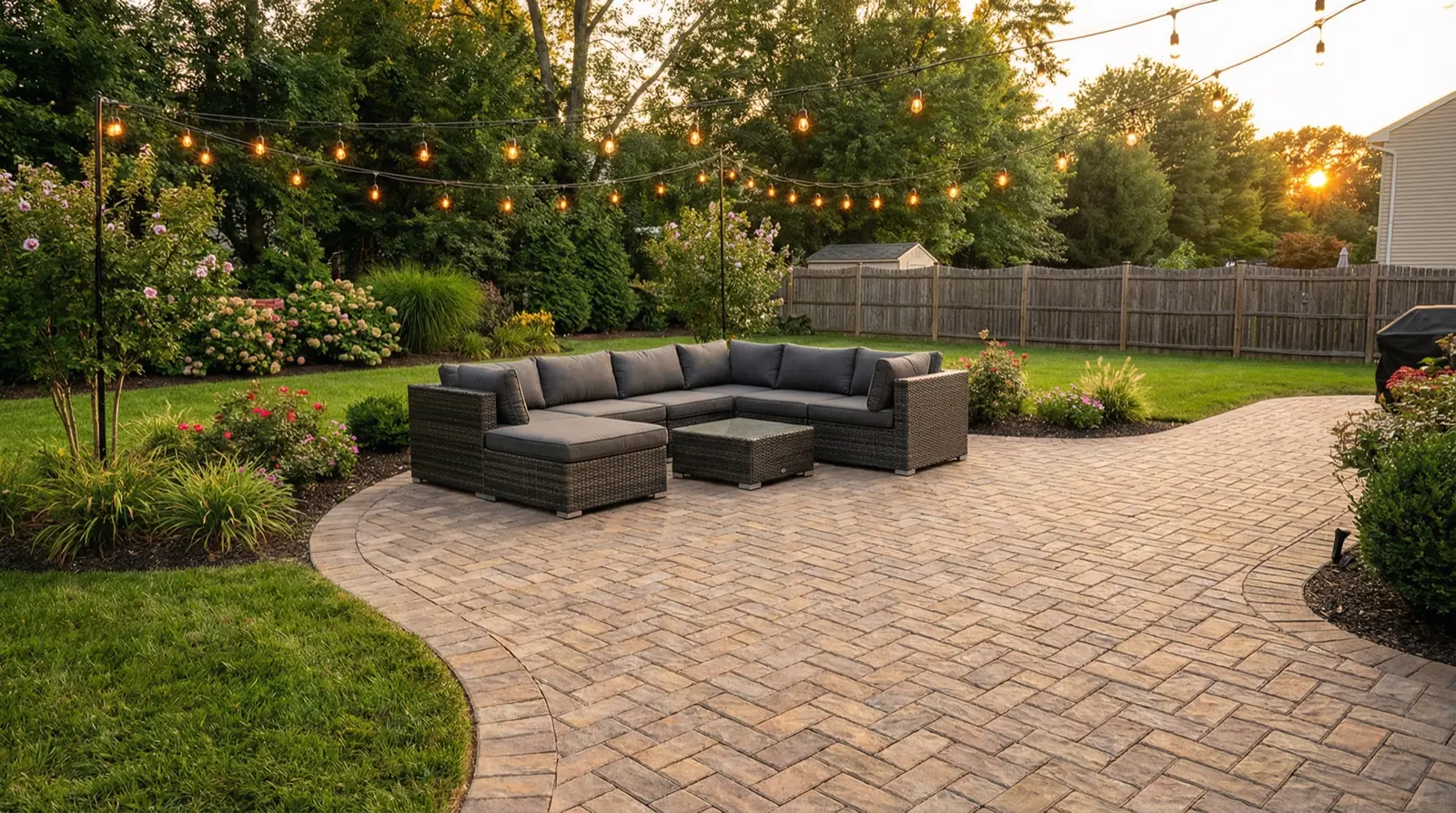
Both can look great on install day. The difference shows up in year three, five and ten. Stamped concrete is one solid slab, and in New Jersey a solid slab cracks. Pavers are hundreds of separate pieces locked together, so they move with the ground instead of breaking.
If the lowest price today matters most, stamped concrete wins. If you want a patio or driveway you can fix in an afternoon instead of replacing, pavers win. That is why we build in pavers.
Side by side
The six things that decide which one you will be happier with.
Stamped concrete
- Lower price up front, faster to pour
- One slab: freeze-thaw and settling crack it, and control joints only choose where
- Road salt and de-icers can flake and pit the surface
- Repairs are patches that rarely match the color and stamp
- Needs resealing every couple of years to keep its color
- Wait several days before walking on it, longer for cars
Pavers
- Higher price up front, more labor to lay
- Hundreds of interlocking units flex with the ground instead of cracking
- Dense manufactured units stand up to salt and de-icers
- Repairs are invisible: lift the bad units, set new ones
- Joints need to stay full, and polymeric sand handles most of that
- Usable as soon as the job is finished
Why the Shore is hard on concrete
01Freeze and thaw
Water gets into the slab, freezes, expands and thaws, over and over every winter. A solid slab has nowhere to go, so it cracks. Pavers have a joint every few inches that takes the movement.
02Sandy soil and high water tables
Ground near the bays and lagoons shifts and settles. A slab that loses support underneath cracks across. A paver surface on a compacted stone base settles evenly, and if one spot dips, it gets lifted and relaid.
03Salt
Salt air near the water and road salt on driveways both work at concrete surfaces. Quality pavers are made denser than poured concrete, which is a big part of why they hold up to it.
What it costs over time
Stamped concrete usually costs less to install. That is the honest part. But the first price is only one line. Add resealing every couple of years, crack repair as it ages, and the day a cracked driveway has to be cut out and poured again.
A paver surface built on the right base is a one-time build that gets repaired, not replaced. We do not publish a per-square-foot rate, because what is under your patio moves the price more than the pavers do. We visit the site, then put a detailed written estimate in your hands within 48 hours. See what drives the price of a paver patio.
If you go with pavers, check these three things
A paver job is only as good as what is under it. Ask any contractor, including us.
How deep is the base?
Ask for the excavation depth and the base material. Compacted dense-graded stone, built in lifts, is what keeps a patio flat. Sand over dirt is how a cheap quote stays cheap. See the best base for patio pavers.
What holds the edges?
Without a real edge restraint the outside rows creep, the joints open, and the whole field starts to drift.
What fills the joints?
Polymeric sand locks the joints and keeps weeds and ants out. Plain sand washes out the first hard rain.
Get the real number for your patio or driveway.
Site visit first. Itemized written estimate within 48 hours. Ocean and Monmouth County.